

Overcoming SMT Production Challenges: The Crucial Role of Conveyor Systems


2026-04-16
Overcoming SMT Production Challenges: The Crucial Role of Conveyor Systems
Table of Contents
- Introduction to SMT Production Challenges
- Understanding Surface Mount Technology (SMT)
- Common Challenges in SMT Production
- Complexity of Components
- Efficiency and Speed Requirements
- Quality Control and Defects
- Space Restrictions in Production Lines
- The Role of Conveyors in SMT Production
- Implementing Conveyor Systems in SMT Production
- Case Studies: Successful Conveyor Implementations
- Frequently Asked Questions (FAQs)
- Conclusion
Introduction to SMT Production Challenges
The field of Surface Mount Technology (SMT) has revolutionized the manufacturing of electronic components, allowing for more compact designs and efficient production processes. However, as the demand for smaller and more complex devices increases, SMT production faces numerous challenges. These challenges can hinder productivity, compromise quality, and lead to increased operational costs. In this article, we will delve deep into these challenges and highlight how conveyor systems can provide effective solutions.
Understanding Surface Mount Technology (SMT)
Surface Mount Technology is a method used to mount electronic components directly onto the surface of printed circuit boards (PCBs). This technique has become the standard in the electronics industry due to its ability to facilitate high-density assemblies. SMT allows for the integration of smaller components, which helps in achieving lighter and more compact devices. However, the complexity and speed required in SMT production necessitate sophisticated solutions to overcome its inherent challenges.
Common Challenges in SMT Production
Understanding the common challenges faced during SMT production is crucial for manufacturers seeking to improve their processes.
Complexity of Components
As technological advancements continue to push the boundaries of electronic design, manufacturers encounter increasingly intricate components. These components often require precise handling, which can be challenging in fast-paced production environments. The need for accurate placement and soldering becomes paramount, and any misalignment can lead to defects.
Efficiency and Speed Requirements
In the competitive electronics market, efficiency is key. Manufacturers strive to maximize throughput while minimizing production time. However, meeting these efficiency targets can be difficult, especially when dealing with complex assemblies. Delays caused by manual handling or inadequate equipment can result in significant downtime, impacting overall productivity.
Quality Control and Defects
Maintaining high quality in SMT production is essential for ensuring customer satisfaction and compliance with industry standards. Quality control measures must be in place to identify defects early in the production process. However, manual inspection methods can be time-consuming and prone to error, leading to costly recalls and rework.
Space Restrictions in Production Lines
Modern manufacturing facilities often face spatial constraints that can limit production efficiency. With the increasing need for automation and advanced machinery, optimizing floor space becomes essential. Inefficient layouts can lead to bottlenecks and hinder the smooth flow of materials through the production line.
The Role of Conveyors in SMT Production
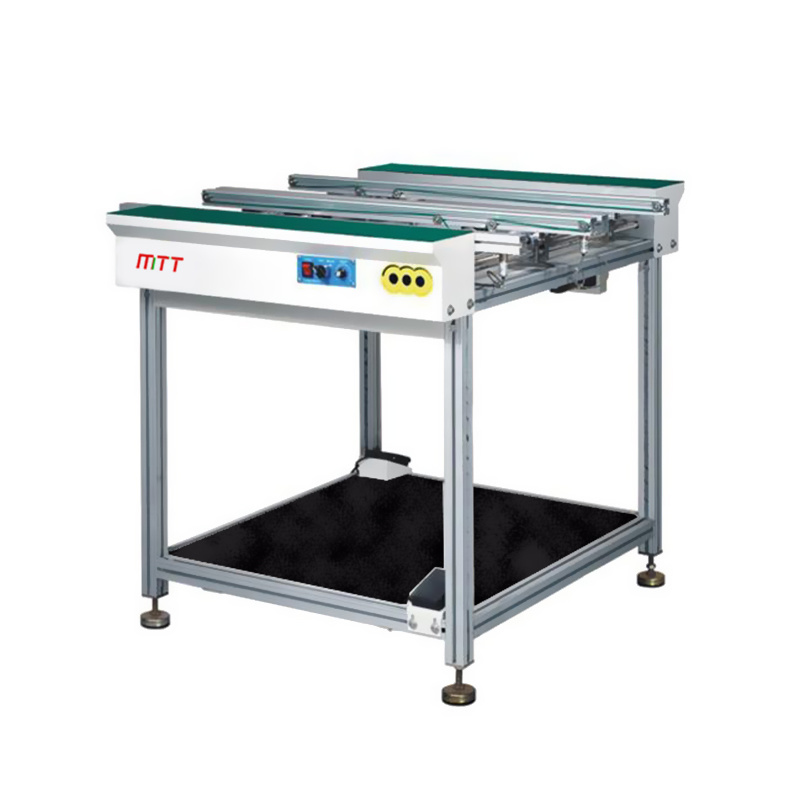
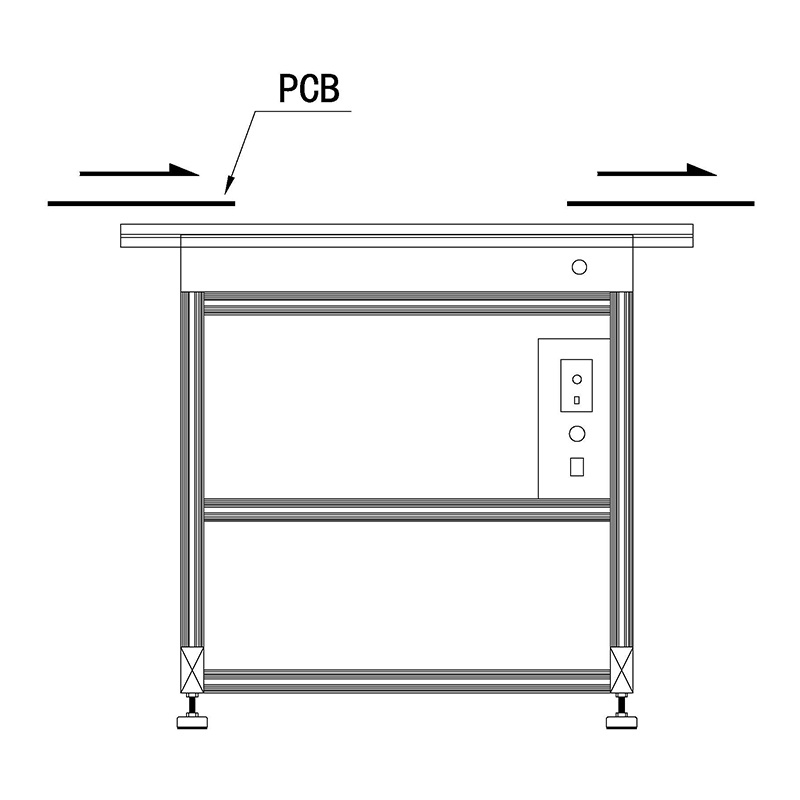
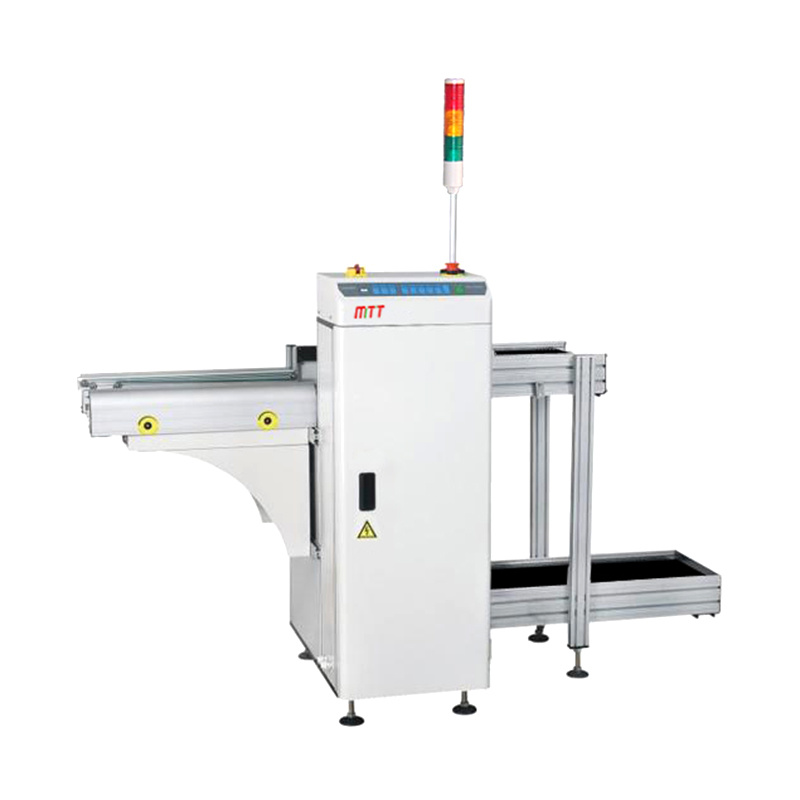
Conveyor systems play a pivotal role in addressing the challenges faced in SMT production. They provide a streamlined, automated solution for transporting components and assemblies through various stages of production.
Types of Conveyors Used in SMT
Several types of conveyor systems are utilized in SMT production, each serving specific purposes:
1. **Belt Conveyors**: Ideal for transporting components at a consistent speed, belt conveyors reduce manual handling and enhance workflow efficiency.
2. **Modular Conveyors**: These flexible systems allow for easy customization and adaptability to different production layouts, making them suitable for various manufacturing environments.
3. **Overhead Conveyors**: Efficient for handling components in tight spaces, overhead conveyors optimize floor space and improve accessibility.
4. **Automated Guided Vehicles (AGVs)**: These are advanced conveyor systems that navigate autonomously, transporting materials without human intervention.
Advantages of Using Conveyors
Implementing conveyor systems in SMT production offers several advantages:
- **Increased Efficiency**: Conveyors facilitate faster transportation of components, significantly reducing lead times and enhancing throughput.
- **Improved Accuracy**: Automated systems minimize the risk of human error, ensuring precise placement and handling of components.
- **Enhanced Quality Control**: Integrated inspection systems can be incorporated into conveyor lines, allowing for real-time defect detection and quality assurance.
- **Space Optimization**: Conveyors can be designed to fit within existing production layouts, maximizing the use of available space and improving workflow.
Implementing Conveyor Systems in SMT Production
Implementing conveyor systems requires careful planning and consideration of several factors. Manufacturers must evaluate their specific needs, production volume, and available floor space before selecting the appropriate conveyor solution.
1. **Assessment of Production Needs**: Start by analyzing the current production process to identify bottlenecks and areas for improvement.
2. **Selecting the Right Conveyor Type**: Choose a conveyor system that aligns with the production requirements, taking into account factors such as component size, weight, and speed.
3. **Integration with Existing Systems**: Ensure that the new conveyor system can seamlessly integrate with existing machinery and processes for optimal performance.
4. **Training and Maintenance**: Proper training for personnel on using and maintaining the conveyor system is essential for maximizing its effectiveness and lifespan.
Case Studies: Successful Conveyor Implementations
Examining real-world implementations of conveyor systems in SMT production can provide valuable insights into their effectiveness.
- **Case Study 1: XYZ Electronics Manufacturing**
XYZ Electronics recently faced challenges with manual handling of components, leading to delays and increased defects. By integrating modular conveyor systems, they improved workflow efficiency by 30% and reduced defects by 15%.
- **Case Study 2: ABC Circuit Solutions**
ABC Circuit Solutions struggled with space constraints in their production facility. They implemented an overhead conveyor system that optimized their layout, resulting in a 25% increase in production capacity while maintaining quality standards.
Frequently Asked Questions (FAQs)
1. What are the main benefits of using conveyor systems in SMT production?
Conveyor systems enhance efficiency, accuracy, quality control, and space optimization, which are critical for successful SMT manufacturing.
2. How do conveyor systems improve quality control in SMT?
Many conveyor systems can integrate real-time inspection technology, allowing for immediate identification of defects and ensuring quality throughout the production process.
3. What types of conveyors are most suitable for SMT production?
Belt conveyors, modular systems, overhead conveyors, and automated guided vehicles (AGVs) are commonly used in SMT production to enhance efficiency and flexibility.
4. How can I assess my production needs for conveyor implementation?
Analyze your current production processes to identify bottlenecks and inefficiencies, and consider factors like component size, weight, and required speed when evaluating conveyors.
5. What challenges might I face when implementing conveyor systems?
Potential challenges include integration with existing systems, space constraints, and the need for personnel training. Proper planning and assessment can mitigate these issues.
Conclusion
In the rapidly evolving landscape of SMT production, addressing challenges is paramount for maintaining competitiveness and ensuring product quality. Conveyor systems emerge as essential tools that not only streamline processes but also enhance overall production efficiency. By understanding the types of conveyors available and their advantages, manufacturers can effectively tackle the complexities of SMT production, leading to improved outcomes and greater customer satisfaction. Embracing these innovations is key to overcoming the challenges of today and maximizing the potential of tomorrow.
Related News